
I like to be a free spirit
- Dec 21, 2025
- 11 min read
An Astrological Look at The Life of Princess Diana

It was an unhappy childhood. She was raised in the English aristocracy, and she endured her parents’ painful divorce at the age of seven. It was widely known that she had a troubled and difficult relationship with her birth mother, Frances Shand Kydd. Frances left the marriage to be with another man, which contributed to a fractured family dynamic. Her brother summed it well when he stated about his mother, she was “not cut out for maternity” and infatuated with someone else. This left her father to be the primary source of love and stability.
Diana Frances Spencer was born on July 1, 1961, at Park House on Queen Elizabeth II’s Sandringham estate, into the aristocratic Spencer family. Her parents, John Spencer (Viscount Althorp) and Frances Roche, belonged to the British nobility and had longstanding ties to the royal family. At the age of 9, Diana began attending Riddlesworth Hall, an all-girls boarding school, and later went to West Heath School. However, she faced academic challenges and left school at 16 without obtaining formal qualifications.
Ultimately, after finishing school in Switzerland where she did not complete a formal academic program or earn a degree, the school focused on social graces, languages, and “finishing” rather than qualifications, she moved to London and worked in modest jobs such as a kindergarten assistant, gaining life experience outside aristocratic circles.
Diana is best known for her marriage to Prince Charles in 1981, becoming the Princess of Wales, and then her later work for which she championed causes like AIDS awareness, the campaign against landmines, and numerous children’s and humanitarian charities, earning global admiration and the nickname “the People’s Princess” for her approachable and caring manner. Unfortunately, the marriage to Charles was tumultuous, and the two separated in 1992, finalizing their divorce in 1996.

Before their divorce, a significant turning point occurred when Diana gave a BBC interview in 1995, where she candidly discussed her personal challenges and marriage to Prince Charles. Diana remarked, "There were three of us in this marriage – so it was a bit crowded," referring to Charles's affair with Camilla Parker Bowles, which began in 1986, just five years after their wedding. They had been separated since 1992. Diana also confessed to her own infidelity following the breakdown of their marriage. She discussed her battles with bulimia and post-natal depression after Prince William's birth. One of the most straightforward moments in the interview was when she expressed doubt about Charles's suitability to be king: "Being Prince of Wales produces more freedom now and being King will be a bit more suffocating... I don't know whether he could adapt."
Let's now look at Princess Diana's birth chart to see if we discern more about her, including the struggles she faced and the passions she had.

Those who knew Diana best spoke of her very compassionate, caring, and protective nature as evidenced in her becoming a global humanitarian icon, famously walking through a minefield in Angola at one point during her life. A few of her better-known quotes in this regard are:
"Carry out a random act of kindness, with no expectation of reward, safe in the knowledge that one day someone might do the same for you."
"Nothing brings me more happiness than trying to help the most vulnerable people in society. It is a goal and an essential part of my life—a kind of destiny."
"The biggest disease the world suffers from in this day and age is the disease of people feeling unloved."
Where in Diana's natal chart can we find the mix of struggles with her mother and early childhood, her natural desires toward forming close relationships and playing a nurturing role while at the same time being restless and detached herself, her struggles with academic challenges, or her desires for justice and peace in the world at large? The answer lies with her natal moon.
Many astrologers associate the moon in a natal chart to not only represent our own emotional nature but also our birth mother and our familial experience in general. I have found this be accurate in my astrological consultations. When looking at the moon through this lens in Diana's chart we can see direct correlations with what we know to have been her life experiences. Diana was born with an Aquarius Moon. The manner in which Diana' relationship with her mother, which was reported as a strained relationship, unfolded throughout her life is most certainly embodied in the Aquarian archetype. This is the energy of seeking freedom, rebelling, and hearing one's own drummer. Aquarians have a proclivity toward erratic behaviors that pop-up suddenly and cause a fair amount of disruption. There can be a form of liberated inconsistency present.
According to various accounts, Princess Diana was about seven years old when her parents divorced in 1969. Her parents' marriage began to sour around 1967 when her mother, Frances Shand Kydd, fell in love with another man, which contributed to the breakdown of their marriage. After the divorce, Frances left the family home and later married Peter Shand Kydd in 1969. The separation led to a difficult custody battle, and Diana ended up living with her father. Diana reportedly felt abandoned by her mother, who had promised to come back to see her but never did. This family upheaval had a lasting emotional impact on Diana throughout her life.
Additionally, this Aquarius Moon was conjunct an Aquarius South Node of the Moon at the karmic 29th degree, which was further conjunct by a retrograde Pisces Chiron. What is Chiron? It is a centaur asteroid, known as the "wounded healer," symbolizing deep-seated emotional wounds from early life, and personal vulnerabilities. Also of note, this configuration is all in Diana's second house where not only do we seek material security, but also our own self-worth. The branch of astrology that looks at the nodal axis in a birth chart is known as Evolutionary Astrology. Probably the most well-known expert in this area is Steven Forrest. Interestingly, in his book Yesterday's Sky - Astrology and Reincarnation he writes the following concerning the south node of the moon and its association with resources, and not just dollars but also the basics like food and shelter, when placed in the second natal house:
"With the south node in the second house, prior life issues around such resources have left a mark on this person. Depending on the condition of the south node's sign and planetary connections, it is possible that this individual has known literal starvation--and this configuration is not uncommon in the charts of people with present-life eating disorders, simply because they starved in previous one."
Another very applicable observation that Steven makes about a second house placement of the south node of the moon is:
"Reliably, in prior lives, he or she has known the distorting impact of financial extremes. Poverty may have taken its grinding toll--but great wealth can twist lives almost as easily, creating a spider web of expectations, manipulations, and mistrust."

Can we observe such an influence manifesting in Diana and her family dynamics? It seems likely. Diana's well-documented battles with bulimia nervosa, severe depression, and multiple suicide attempts certainly provide evidence, as do her strong desires to assist those less fortunate than herself from a privileged and financial perspective. Diana supported the homeless and those in poverty, often through hands-on advocacy that attracted global attention. Both of these facets of Diana's character appear to be closely connected to her Moon, South Node, and Chiron placement. Additionally, her South Node is in the sign of Aquarius, where we find the rebel who challenges the accepted reality of one's existence and seeks to change the world. Diana clearly expressed her desire to do just that.
Further considering the role of Chiron in Pisces, it's important to recognize that this is often indicative of a person who never feels quite comfortable in the material realm. There is a longing for a release from the density of material life. They desire to be reborn into a more inclusive consciousness that also wrestle with an equally strong urge to destroy individuality and return to preconscious bliss that echoes strongly within. Adding an additional layer to the pressures of this Chiron placement is an opposition from Diana's natal Pluto which was in her eighth house. Here we have the planet that is the co-ruler of this house in the natural zodiac, positioned in a challenging manner to Diana's wound. This likely accounts for Pluto’s themes of death/rebirth, power, and the shadow, creating pressure to face trauma, shame, or suppressed pain playing such major roles in her life.
A final factor contributing to the intense inner conflicts Diana experienced is the positioning of the Sun, representing her identity, and Mercury, her mind, in the emotionally protective sign of Cancer. This zodiac sign is most closely linked with themes of motherhood, nurturing, memories, and sensitivity. As a cardinal water sign, it emphasizes the initiation of everything through emotions. Additionally, Diana's Sun was located in her marriage house, the seventh house, which is where we engage in our most intimate relationships. She sought safety, protection, and security in these relationships, yet it appears that her mother's early abandonment and the later infidelities in her marriage significantly influenced her past patterns of insecurity and the desire to escape. Furthermore, her Aquarius Moon governs her Sun, tying together the challenges of the second house with her intimate relationships with others.
If we dig a bit deeper into the asteroid tool kit, the question becomes if there are other asteroids that could point to the tendency Diana had to enter in depressive states? Or what about the love affairs? Before doing so, however, I wish to remind the reader that asteroids in practice have exhibited the ability to be interchangeable. Many do not have one singular definition. There seems to be a very Gemini nature to them, possessing a duality just like life itself. Many asteroids are used with intuitive interpretation. They are truly a new frontier for which discovery of their meaning is still unfolding.
As I searched the names of asteroids I have used in the past to identify a person's potential to fall prey to both depression and tumultuous love affairs, I found the following placements of the asteroids Melancholia, Isolda, and Psyche, to be most resonant.
At Diana's birth the asteroid Melancholia was at 23 degrees and 56 minutes of Aries in her fourth house of family and one's emotional foundation. It sits only 50 minutes from being in a partile (exact) conjunction with Diana's IC or Imum Coeli, Latin for "bottom of the sky" the place that reveals hidden family patterns or traumas, and is often linked to childhood conditioning, the nurturing parent (typically mother), and emotional foundations. This asteroid's application is self-explanatory in its name; it correlates with melancholy and depression.

Again, we see in this placement a confirmation of the story we know to be Diana's life. Evidence for this can be found in her own words. Here are some comments by Diana:
She described post-natal depression as waking "feeling you didn't want to get out of bed, misunderstood, and just very, very low," admitting she was "the first person ever to be in this family who ever had a depression or was ever openly tearful."
In her Panorama interview, she spoke of "deep, profound sadness" after separation and feeling "empty" despite outward success.
Further, Melancholia is in the very powerful, forceful, and destructive energy of Aires which no doubt magnified the impact of these energies in Diana's life.
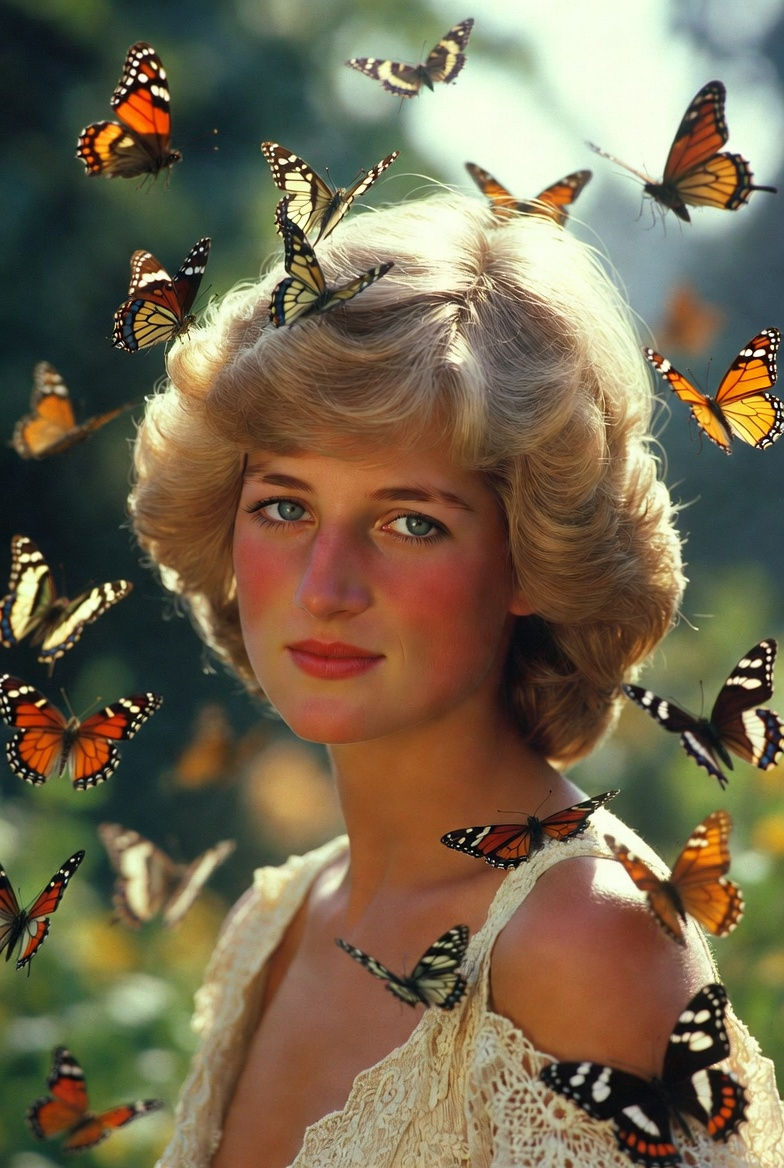
Melancholia also plays a significant and revealing role in Diana's natal chart. It forms a square with the asteroid Psyche in Cancer, located in her seventh house. This house pertains to close personal relationships, including marriage. The name Psyche means "soul" or "butterfly," symbolizing the transformation and rebirth often achieved through the purification of suffering from physical or mental issues. Being in the sign of Cancer, where emotions are deeply felt and there is a longing for security, this highlights the disruptive emotions Diana frequently experienced in her closest relationships. A square signifies a challenge in life, and this one directly links Diana's tendency towards melancholy with her feelings of security and protection within relationships. The challenge is evident.
Also, Psyche forms a further square to the asteroid Isolda in Libra which is domiciled in Diana's ninth house. This is an asteroid that some have attributed to love, infidelity, lust, affairs, and love at first sight. Notably, it is in the astrological sign that is connected to relationships. Again, the dynamic energies flowing to Psyche in Diana's relationship house are being challenged by powerfully influential energies that no doubt cause conflict. The ninth house is the place we seek meaning, cast a wide net, and are adventurous.
Princess Diana was involved in several confirmed or widely reported extramarital affairs during her marriage to Prince Charles, often amid mutual marital discord.
Two confirmed affairs, according to Vanity Fair, Panorama, and Vogue articles involved:
Barry Mannakee (1985–1986): Her police protection officer; Diana called him "the greatest fella I've ever had" and admitted deep feelings before his death in a motorcycle crash
James Hewitt (1986–1991): Army captain; she confirmed the passionate affair in her 1995 Panorama interview, noting it helped her cope but ended due to his Germany posting.
Other relationships also reported by Vanity Fair, Vogue, and Swoon were:
James Gilbey (late 1980s–early 1990s): Childhood friend exposed in the "Squidgygate" tapes scandal, where intimate calls were leaked.
Oliver Hoare (early 1990s): Art dealer and friend of Charles; involved secretive meetings, with Diana allegedly making harassing calls to his wife.
Hasnat Khan (1995–1997): Heart surgeon dubbed her "soulmate"; a serious post-separation romance that influenced her consideration of conversion to Islam.
Finally, there is the fateful night of August 31, 1997. Reports suggest that Diana had completed her divorce from Charles in 1996 and ended a two-year relationship with heart surgeon Hasnat Khan in mid-1997; she began that summer single and emotionally vulnerable. Then came a romance with the son of a billionaire, Dodi Fayed. This relationship was an intense, highly publicized, but very brief summer affair that lasted approximately six to eight weeks in July–August 1997. Their romance quickly became a tabloid sensation; agencies labeled photos of the couple together as “million-pound pictures,” resulting in relentless pursuit by photographers on boats, motorbikes, and outside residences and hotels.
On August 30, 1997, it was reported that Dodi had bought a “Dis‑moi oui” (“Tell me yes”) ring, which many saw as a sign of an intended engagement. Sadly, events did not go as planned. In the early hours of August 31st, Diana and Dodi left the Ritz hotel where they were staying, and while trying to escape the paparazzi, they were involved in a fatal crash in the Pont de l’Alma tunnel. Dodi and his driver, Henri Paul, died at the scene, and Diana passed away later at the hospital.
Diana, like so many high-profile persons, had to live her life out in a fishbowl for all of the world to see, with every moment scrutinized by the public eye and every decision analyzed by the media. This constant exposure not only shaped her public image but also profoundly impacted her personal experiences and relationships. Such lives give astrologers the unique opportunity to explore correlations to actual life events and archetypal energies present in their birth charts, allowing them to delve into the cosmic influences that may have guided their paths. Through astrological analysis, one can uncover the intricate connections between celestial movements and the significant milestones in Diana's life, from her tumultuous marriage to Prince Charles to her philanthropic endeavors that resonated with millions around the globe.
However, it's important to remember that these are "real" people living "real" lives, often marked by struggles and triumphs that go beyond their public personas. Diana had extreme tendencies in many different directions, exhibiting profound compassion, deep empathy, and an innate caring nature that endeared her to the public. Yet, these admirable qualities were often intertwined with insecurities, fears, and desires that imbued her persona with glaring conflicts. The juxtaposition of her royal duties and her desire for personal happiness created a complex inner landscape that was at times tumultuous and challenging.

As she navigated the pressures of royal life, Diana faced the harsh realities of public expectations and personal aspirations. Her ability to connect with people from all walks of life, whether through her charity work or her candid interactions with those suffering from illness, showcased her immense capacity for love and understanding. Yet, beneath this exterior lay a woman grappling with her own vulnerabilities, battling feelings of inadequacy and isolation that often accompanied her royal status. This duality made Diana a compelling figure, illustrating the human experience of navigating both light and shadow, joy and sorrow, in a world that often demands perfection.
In essence, Diana's life serves as a poignant reminder of the complexities inherent in human existence. Her story is not just one of fame and fortune but also one of struggle and resilience, reflecting the universal themes of love, loss, and the quest for identity. As we reflect on her life, it becomes clear that the energies present in her birth chart may provide insight into her experiences, but they cannot fully encapsulate the depth of her emotions and the richness of her journey. Diana's legacy continues to inspire many, reminding us that behind every public figure lies a multifaceted individual with a unique story to tell.


Comments